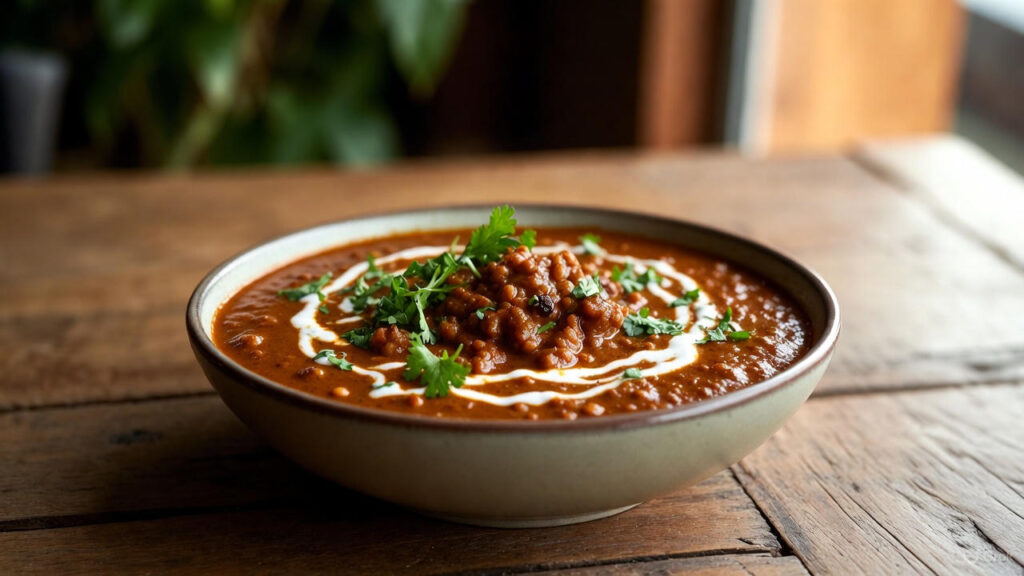
Hey there, food lovers! If you’ve ever stepped into a Punjabi dhaba or a fancy North Indian restaurant, you know that moment when the server places a steaming bowl of Dal Makhani in front of you. That rich, velvety, buttery black dal that’s slow-cooked to perfection – it’s pure comfort in a bowl. For me, Dal Makhani isn’t just a dish; it’s nostalgia on a plate. Growing up, it was the star of every family gathering, wedding feast, or lazy Sunday lunch with butter naan. And trust me, once you make this authentic Punjabi Dal Makhani recipe at home, you’ll never order it out again! In this post, I’ll share everything about Dal Makhani – its fascinating history, why it’s called “makhani” (buttery), a foolproof restaurant-style Dal Makhani recipe, pro tips for that dhaba-like smokiness, and even Instant Pot variations. Whether you’re searching for the best Dal Makhani recipe or an authentic Punjabi Dal Makhani, this one’s a keeper. Let’s dive in! Credit by: AI Generated img What is Dal Makhani? The Buttery Queen of Punjabi Dals Dal Makhani (also known as Maa ki Dal or Dal Bukhara in some places) is a luxurious lentil curry from the Punjab region of India. “Dal” means lentils, and “Makhani” literally translates to “buttery” in Punjabi – and boy, does it live up to the name! It’s made primarily with whole black urad dal (black gram lentils) and a small amount of rajma (kidney beans), slow-simmered with butter, cream, tomatoes, and aromatic spices until it turns into a creamy, dreamy gravy. Unlike everyday dals like dal tadka or chana dal, this one is indulgent, reserved for special occasions. It’s hearty, mildly spiced, and has that subtle smoky flavor that makes it irresistible with naan, jeera rice, or tandoori roti. Fun fact: Authentic Dal Makhani gets its signature creaminess from hours of slow cooking – some restaurants simmer it overnight on low heat! The Fascinating History of Dal Makhani Did you know Dal Makhani isn’t an ancient recipe? It’s a relatively modern invention from post-partition India! The credit goes to Kundan Lal Gujral and Kundan Lal Jaggi, Punjabi migrants from Peshawar (now in Pakistan) who opened the iconic Moti Mahal restaurant in Delhi in the 1940s. They were already famous for inventing Butter Chicken using their “makhani” tomato-butter sauce. One day, they decided to elevate the simple home-style black urad dal (ma ki dal) by adding that same rich, buttery gravy loaded with cream and slow-cooked over tandoor coals. Boom – Dal Makhani was born! It quickly became a sensation and spread across India and the world. Places like ITC Bukhara in Delhi took it further with their famous Dal Bukhara (made only with urad dal, no rajma, and simmered for 24+ hours). Today, it’s one of the most loved Punjabi dishes globally. Credit by: AI Generated img Authentic Restaurant-Style Dal Makhani Recipe (Stovetop Method) This is my tried-and-tested Punjabi Dal Makhani recipe that tastes exactly like the one from your favorite dhaba or restaurant. The secret? Slow simmering and a touch of dhungar (smoking) for that authentic smoky aroma. Serves: 4-6 | Prep Time: 10 mins + overnight soak | Cook Time: 2-3 hours Ingredients For Cooking the Dal: For the Masala: Credit by: AI Generated img Step-by-Step Instructions Garnish with a swirl of cream, butter, and coriander. Your restaurant-style Dal Makhani is ready! Instant Pot Variation Soak lentils as usual. Sauté masala in Instant Pot on sauté mode. Add soaked dal, 3 cups water. Pressure cook on high for 30 minutes. Natural release. Simmer on sauté mode for 20-30 mins, adding cream at the end. Dhungar works here too! Credit by: AI Generated img Pro Tips for the Best Dal Makhani Ever Read More Recipes: How to Make Rajma Masala – Punjabi Style Red Kidney Bean Curry (Restaurant wala Taste at Home) What to Serve with Dal Makhani There you have it – the ultimate Dal Makhani recipe that’s creamy, buttery, and full of Punjabi soul. Make it this weekend, and tag me in your pics (okay, imaginary tags since this is a blog 😄). If you try this authentic Punjabi Dal Makhani, drop a comment below – I’d love to hear how it turned out!