
Dhokla: I’ve been making khaman dhokla at home for years now, mostly because the ones from outside shops in Kolkata or even Gujarat trips always taste better than my early attempts. After too many flat, rubbery or dry disasters, I finally figured out what actually makes a difference. This is not copied from anywhere – it’s just how I do it now, and it comes out soft, spongy and gone in minutes every single time.
Most people in Bengal call it “dhokla” and expect that bright yellow, super light one made from besan. That’s khaman. The white-ish fermented version (khatta dhokla) is less common here, takes overnight, so we mostly stick to the instant style.
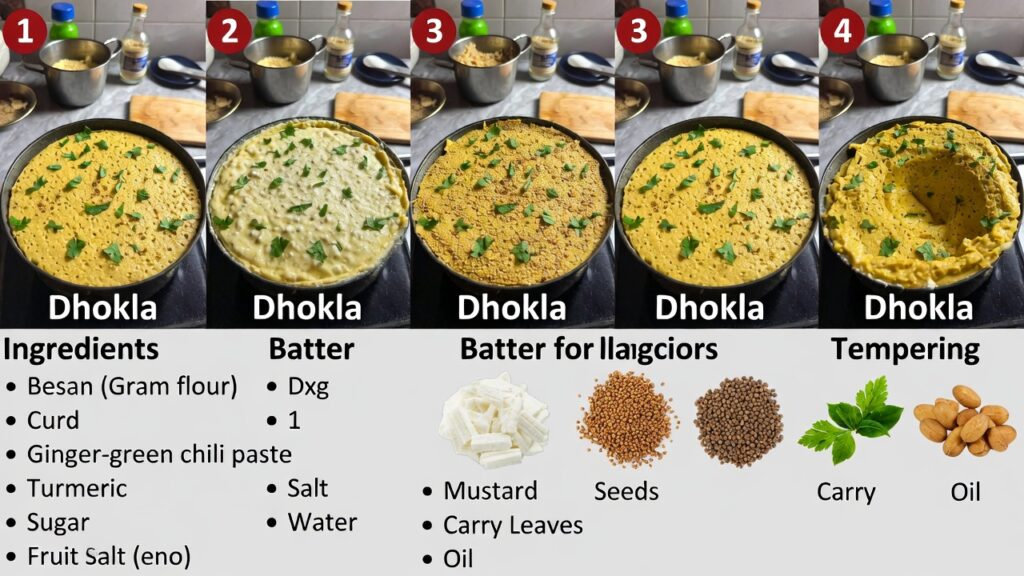
Credit by: AI Generated Img
Things That Usually Go Wrong (And Why I Stopped Doing Them)
- Too much water at once – batter becomes runny, dhokla sinks and turns chewy
- Stirring slowly after Eno – bubbles escape, zero fluff
- Keeping the batter waiting after adding Eno – it deflates in 30 seconds flat
- High flame steaming – edges get hard while middle is still raw
- No sugar syrup in tadka – next day it’s like eating cardboard
What changed everything for me:
- Beating the batter like crazy before Eno (traps air)
- Using slightly sour curd
- Adding Eno last second and pouring immediately
- Medium flame + exact timing
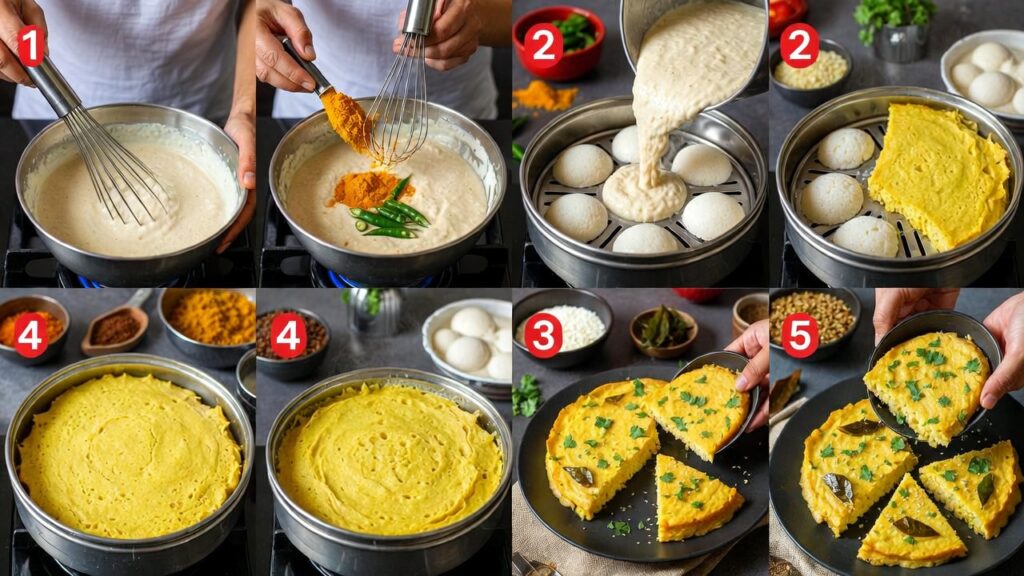
Credit by: AI Generated Img
Ingredients I Use (for a medium thali, serves 4–5)
Batter:
- 1 full cup besan (about 120–130g, fresh packet)
- 2½ tbsp fine sooji
- ½ tsp haldi
- 1 heaped tsp ginger + green chilli paste (I make it fresh)
- 1 tsp sugar
- 1 tsp salt (taste the batter, adjust)
- 1 tbsp oil
- ½ cup thick sour curd (room temp)
- ½–¾ cup water (start with less)
- 1 tsp plain Eno + ½ tsp citric acid (or juice of 1 small lemon)
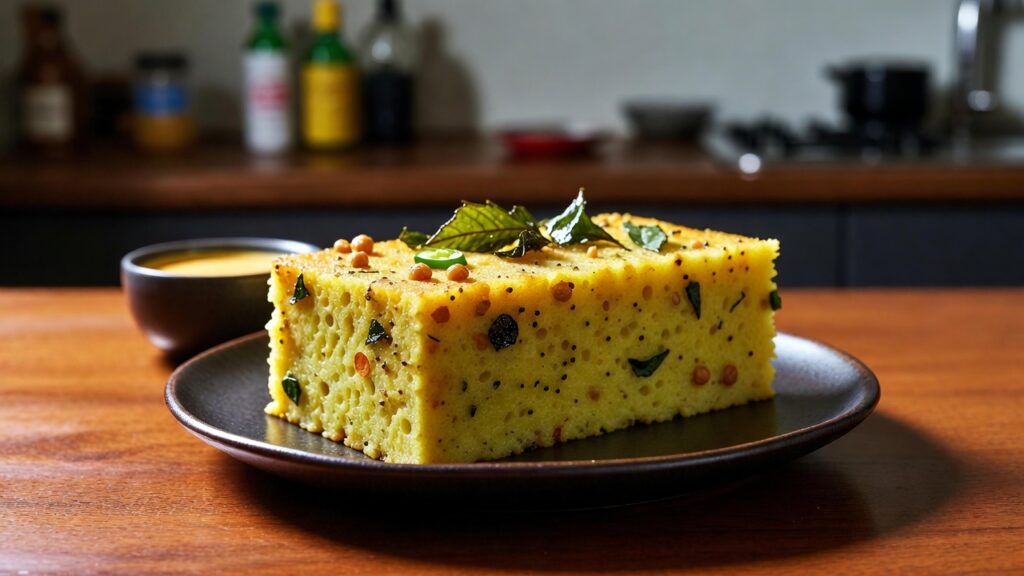
Credit by: AI Generated Img
Tadka:
- 3 tbsp oil
- 1 tsp rai (mustard seeds)
- 10–12 kadipatta
- 2–3 hari mirch slit
- Pinch hing
- 1 tbsp sugar
- ½ cup water
- Handful dhania patta chopped
- 3 tbsp nariyal grated (fresh is best)
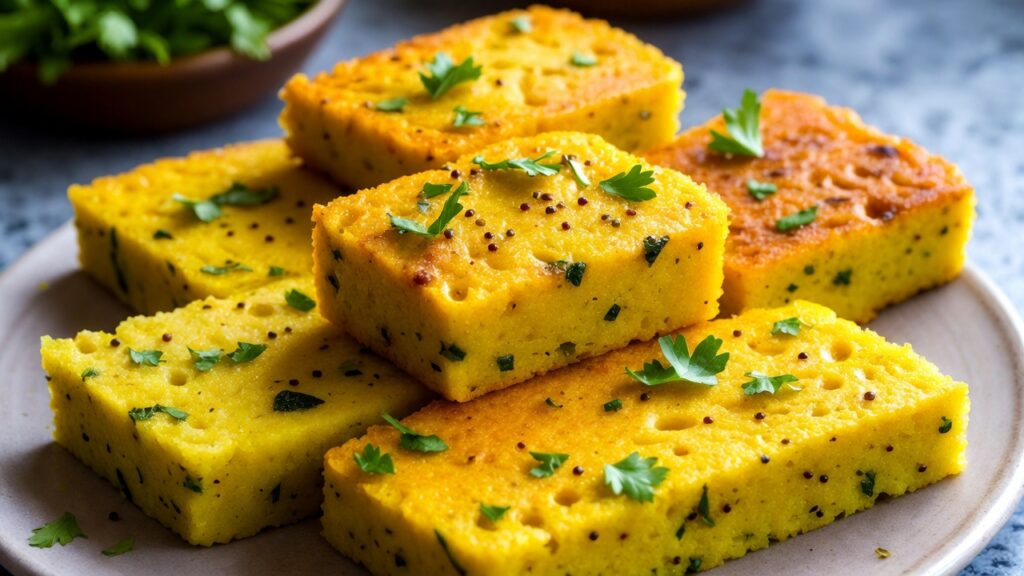
Credit by: AI Generated Img
How I Actually Make It
- Take a big steel bowl. Sift besan straight into it. Add sooji, haldi, namak, cheeni, adrak-mirch paste, oil and dahi. Mix with spoon first.
- Now add water little by little. Start whisking hard – like you’re angry at it. Keep going 4–5 full minutes. Batter should look shiny, medium thick (drops slowly like idli batter), and feel lighter because of air.
- Grease your thali properly with oil, keep aside.
- Put water in cooker/steamer, cover, let it boil properly. Put the greased thali inside for 2 minutes so it heats up.
- Now the quick part: Add citric acid/lemon, then Eno. Whisk like mad in one direction for 35–40 seconds – batter will become very pale and frothy, almost double.
- Pour straight into hot thali. Tap lightly once or twice. Steam on medium flame 16–18 minutes. Toothpick comes clean? Done.
- Rest 5 mins, loosen sides, cut squares.
Tadka: Heat oil, pop rai, add curry leaves, mirch, hing. Then sugar + water. Let it bubble 1 minute till slightly syrupy. Pour all over the pieces slowly so it soaks. Top with dhania and lots of nariyal.
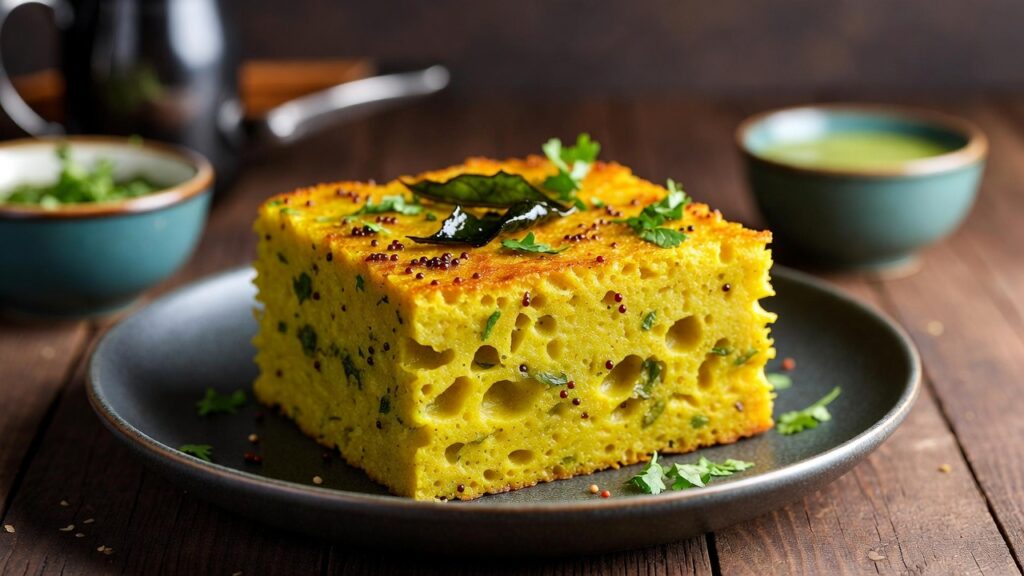
Credit by: AI Generated Img
Read More Recipes: How to Make Mumbai-Style Vada Pav at Home
That’s it. Eat hot with green chutney (my version has extra lemon) and maybe a touch of imli ki chutney. It’s never lasted more than 30 minutes at home.
If yours still doesn’t rise or turns out dry, tell me exactly what happened – I’ll tell you the one thing you probably missed.
Try it this weekend. You’ll see the difference.