
Hyderabadi Haleem: Listen, if you’ve ever broken your fast in Hyderabad during Ramzan, you know exactly what I’m talking about—that first spoonful of hot, ghee-laden Haleem hits different. It’s thick, almost sticky in the best way, with shredded mutton melting into the wheat and lentils, and then you get that crunch from fried onions and a burst of lemon. Man, it just warms you from the inside out after a long day without food or water.
I’ve been chasing that feeling ever since I moved out of the city. Back home in Siliguri now, Ramzan doesn’t feel complete without trying to recreate it in my kitchen. Some years I nail it, some years it’s just “close enough,” but every time I stir that pot for hours, it takes me right back to standing in line at those tiny stalls, chatting with random uncles about whose version is better.
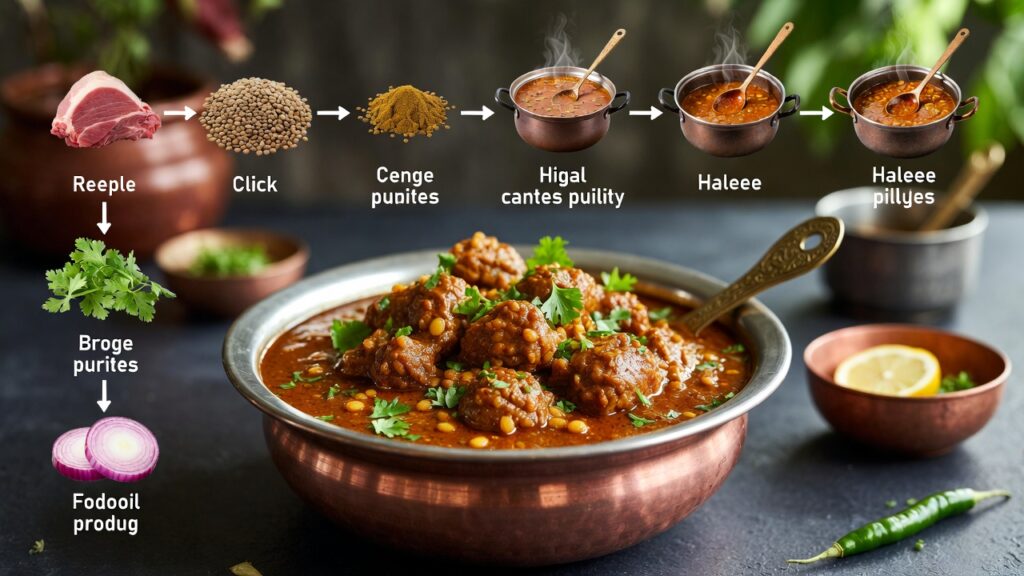
Credit by: AI Generated Img
How This Dish Became Hyderabad’s Pride
Haleem came from the Arab world—Harees, they call it there—just basic meat and pounded wheat cooked slow. Traders and folks from Yemen brought it over centuries ago, but it was the Nizams’ era when it really got its Hyderabadi soul. They added loads of desi ghee, our garam masalas, cardamom, cloves, the works. Stories say some Arab nobles in the Nizam’s court started serving fancier versions at big iftar gatherings, and boom—it stuck.
These days it’s got that official GI tag, which basically means only the real Hyderabadi style can call itself that. During Ramzan, the whole Old City smells like it. People queue up from afternoon, and the big spots churn out kilos upon kilos every day. It’s not just food; it’s community, nostalgia, and a serious energy boost to get through the night prayers.
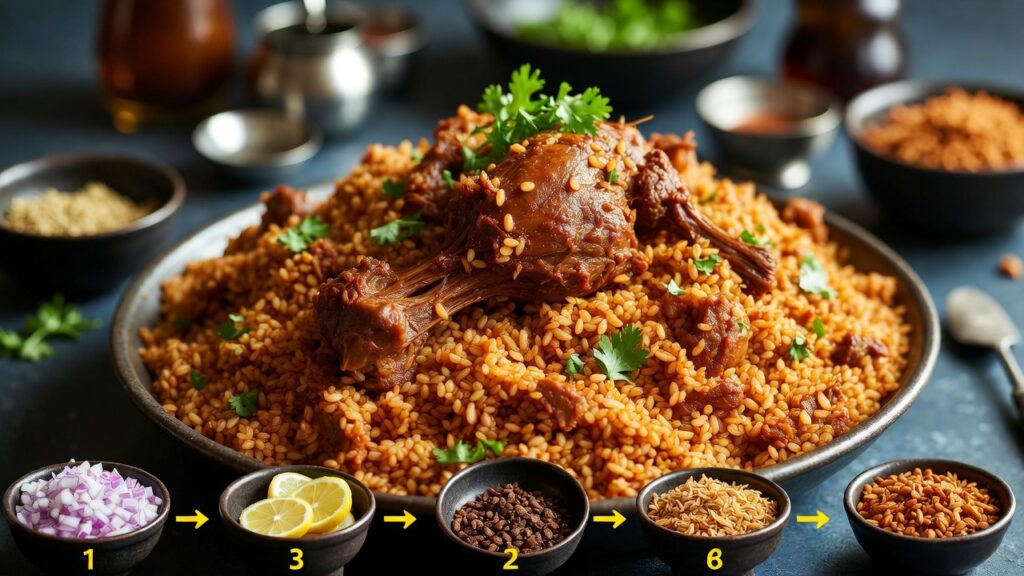
Credit by: AI Generated Img
Why Hyderabadi Haleem Feels Special (Compared to Others)
Pakistani haleem is great—thicker sometimes, more spices—but ours leans heavier on ghee and that silky texture from super-long cooking. The meat has to fall apart naturally, the wheat breaks down into this porridge-like base, and the toppings? Fried onions (birista) done right are crispy heaven, plus cashews, raisins if you’re feeling fancy, fresh mint, coriander, and always a lemon squeeze to cut through the richness.
It’s calorie-dense, no denying—ghee and slow-cooking make it indulgent—but that’s the point during fasting. Protein from mutton and dals, carbs from wheat, fiber to keep you going. One good bowl and you’re set till sehri.
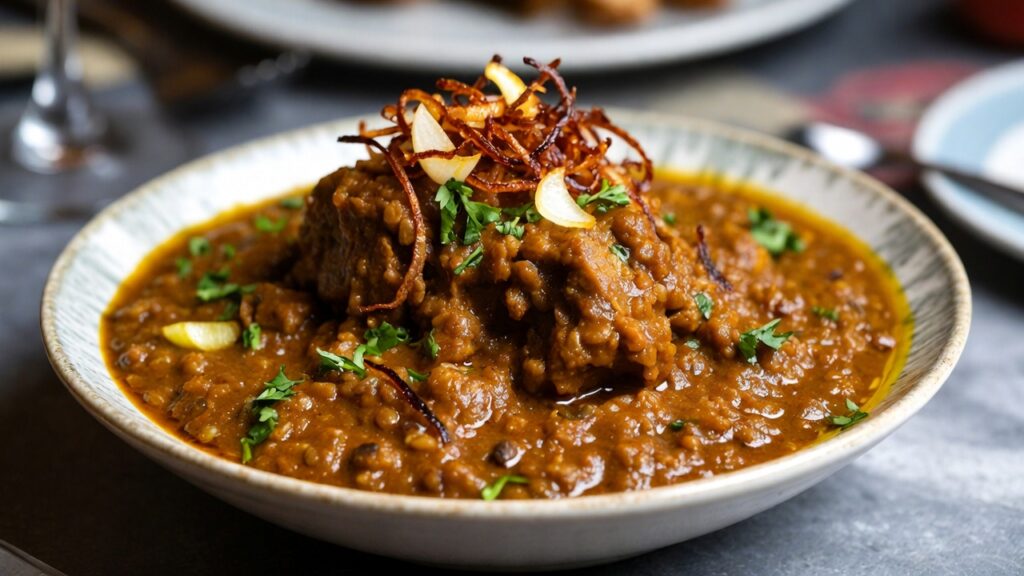
Credit by: AI Generated Img
My Real Home Recipe (The One I Actually Use, Not the Fancy Version)(Hyderabadi Haleem)
I don’t have 12 hours for traditional slow-cooking anymore, so this is my practical take that still tastes legit. Serves 6-8 hungry people.
Stuff You Need
- 1 kg mutton on the bone (shank or mix—bones are non-negotiable for flavor)
- 300 g haleem wheat (soak overnight, or use cracked if you’re short on time)
- 100 g each chana dal, moong dal, masoor dal (soaked a few hours)
- ¾ to 1 cup desi ghee (trust me, don’t reduce this)
- 5 big onions, sliced thin for frying
- 3-4 tbsp ginger-garlic paste
- 2-3 tsp Kashmiri chili powder (for color and mild heat)
- 1 tsp haldi, salt to taste
- 2 tsp garam masala at the end
- Whole spices: couple cardamoms, cinnamon stick, cloves, bay leaves
- For topping: extra fried onions, chopped coriander + mint, lemon wedges, fried cashews or raisins
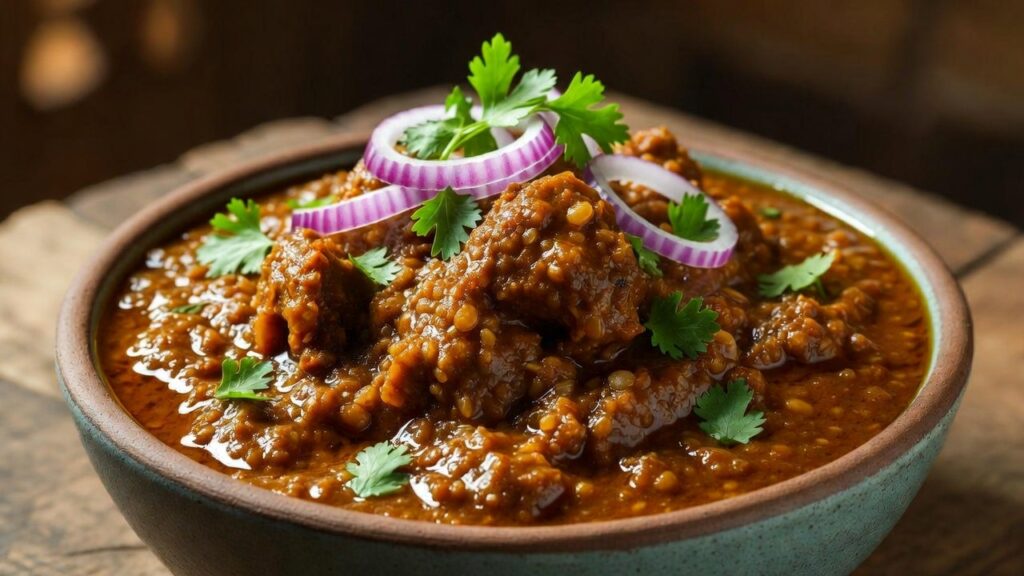
Credit by: AI Generated Img
Steps I Follow
- Marinate the mutton overnight if possible—with yogurt, ginger-garlic, chili, haldi, salt. Makes it tender.
- Heat half the ghee in a big pressure cooker or heavy pot. Fry onions till deep golden-brown (this step takes patience—20-25 mins easy). Take half out for garnish.
- Throw in whole spices, then the marinated meat. Brown it nicely.
- Add soaked wheat + dals, pour water till everything’s covered well (10-12 cups). Pressure cook 45-60 mins on medium (or low flame 6+ hours if no pressure cooker).
- Once pressure drops, fish out bones, shred meat back in. Then mash/blend the whole thing—immersion blender works great. It should look glossy and stringy.
- Low flame again, add remaining ghee, garam masala, adjust salt. Simmer 30-45 mins, stirring so it doesn’t catch at the bottom. That’s when the magic happens.
- Serve piping hot with all the toppings piled on.
Tip from my trial-and-error: Make extra onions—they make or break it. And if it’s too thick next day, just splash hot water or mutton stock.
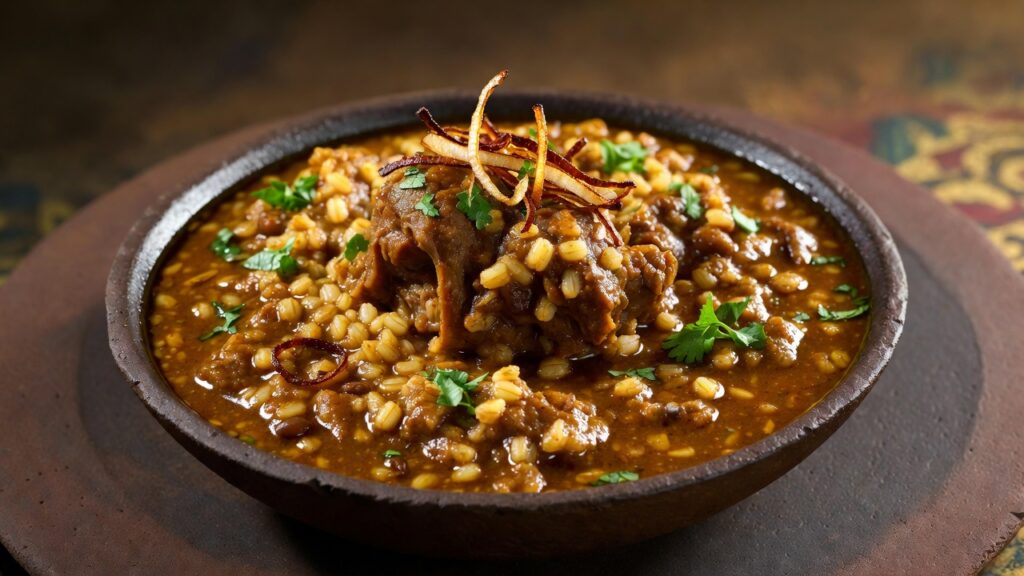
Credit by: AI Generated Img
Where to Grab the Real Thing in Hyderabad Right Now (2025 Buzz)
From what I’ve seen floating around lately, these spots owned Ramzan 2025:
- Hotel City Diamond — Tops almost every list this year, insane crowds, super rich flavor.
- Sarvi Restaurant — Their Irani-style version is mellow and addictive.
- Azeebo Haleem — Newer favorite for many, creamy and bold.
- Peshawar — Solid classic.
- Imperial or Pista House — Still legends, though some say others edged them out this season.
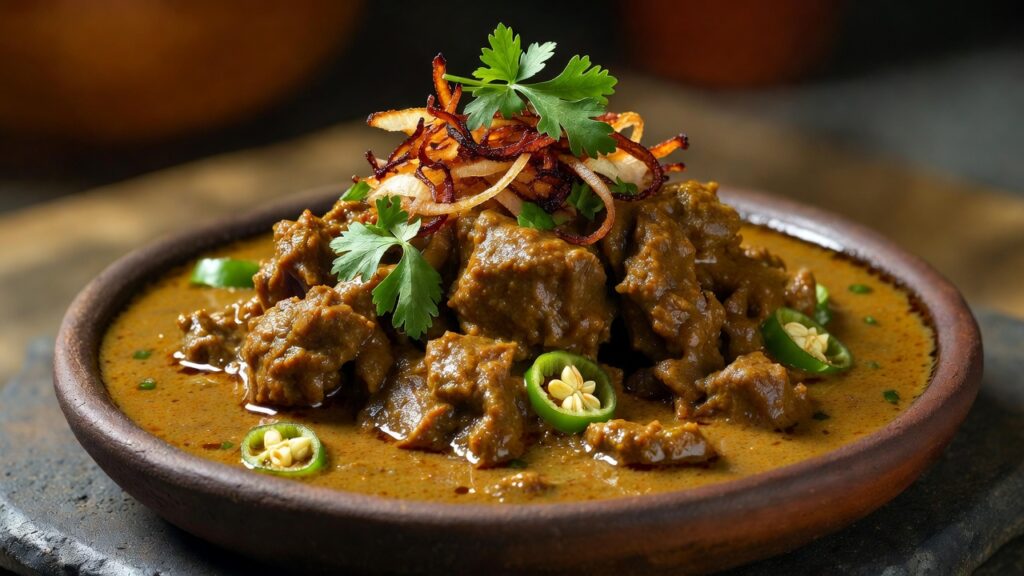
Credit by: AI Generated Img
Read More Recipes: Discovering Mutton Briyani 2025: The King of All Briyanis I’ve Ever Had. Good Info
If you’re ever there, go early—the lines get wild.
For me, Haleem is more than a recipe—it’s that one thing that connects me back to Hyderabad no matter where I am. Even cooking it here in Siliguri, with the windows open and the smell filling the house, feels like a little piece of home during Ramzan.
Have you tried making it yourself? Or got a spot that beats all others? Tell me your stories—I could use some inspiration for next year!
Stay blessed and eat hearty. 🍲