
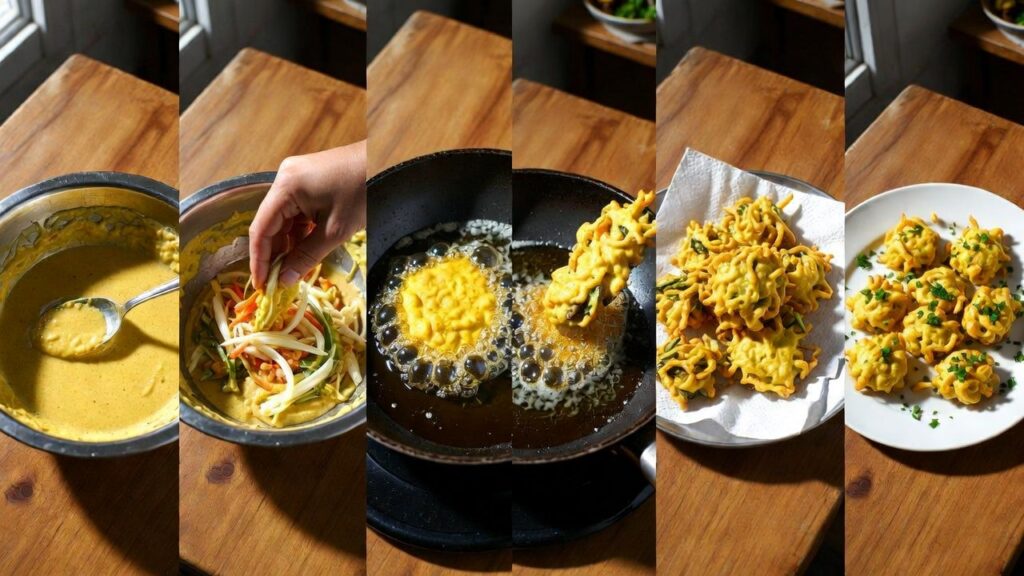
Pakora: Rain starts, lights go dim, someone says “chai banao na” and suddenly the kitchen smells like hot oil and jeera. That smell hits different. It’s childhood, it’s broke-college-days, it’s “bhaiya jaldi laao” at the corner stall. Pakora is the only thing that makes a rainy evening feel like home, even if you’re 2000 km away from it.
I’m not gonna give you chef-level measurements or “perfect ratio” bakwas. I’ll just tell you how I make it at home — the way my family has always done, the way every second house in Bengal does it when the sky turns grey.
Credit by: AI Generated Img
What usually goes into our plate
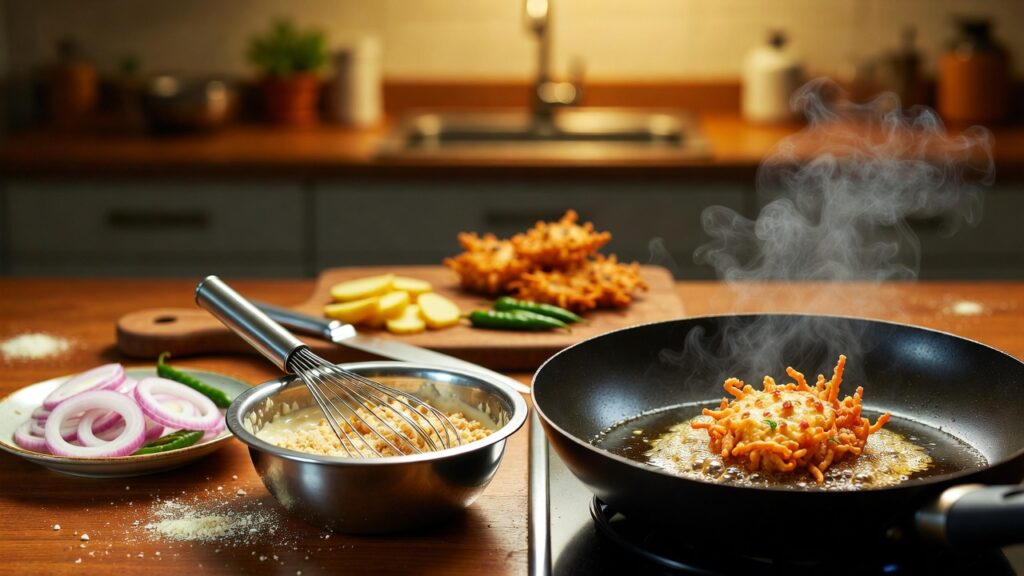
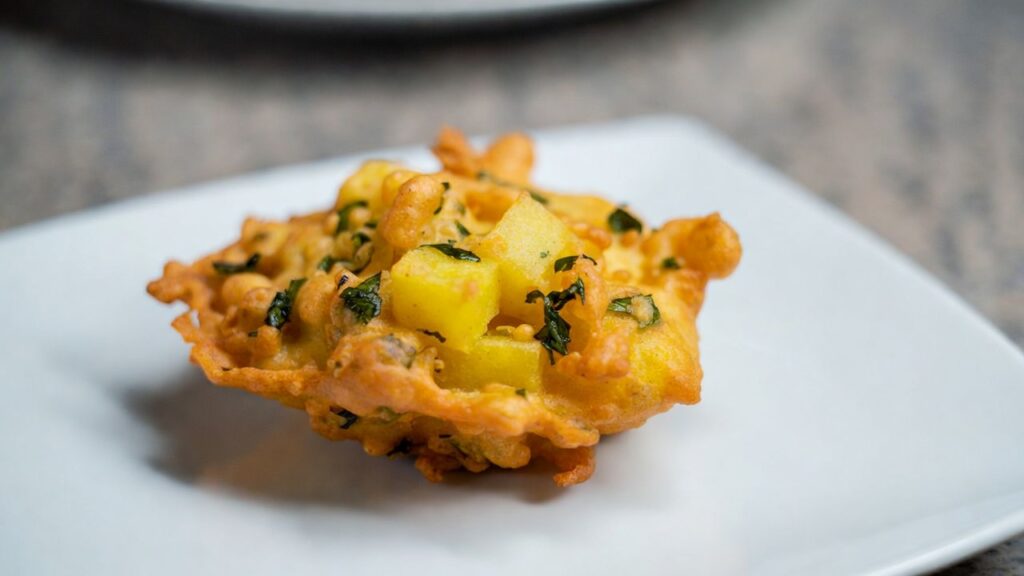
Most common one: pyaz wala Onions sliced not too thin, not too fat — roughly like matchsticks. Then palak (whole leaves sometimes, sometimes chopped). Aloo (thin rounds). Sometimes begun (brinjal) if ma is in the mood. Once in a while bread pakora when we’re feeling extra lazy. And if guests are coming — paneer cubes. That’s show-off level.
Credit by: AI Generated Img
My usual batter (no weighing scale involved)
Take a big steel bowl (the one with the dent from when I dropped it in 2018).
- Besan — maybe one and half katori (roughly ¾ to 1 cup if you insist on measuring)
- Rice flour — ek chhota chamach ya do (this is the only “trick” I swear by — makes it crispier)
- Salt — haath se chhidak ke, taste karte raho
- Lal mirch powder — generous if you like it spicy
- Haldi — just a pinch, mostly for colour
- Jeera — thoda sa crush karke
- Sometimes ajwain — if someone at home is complaining of gas
- Green chilli — 2–4, chopped fine (or more if you’re Punjabi at heart)
- Dhania patta — handful, chopped
- One secret thing I started doing last year: a very small pinch of garam masala or chaat masala at the end. Don’t judge. It works.
Credit by: AI Generated Img
Mix everything dry first with the onions or veggies. Let it sit 5–10 minutes. Onions release water — that’s your free moisture. Then slowly add pani — really slowly. You don’t want flowing batter. You want sticky, thick, almost reluctant batter that barely drops off your fingers.
Pro move: let the batter rest another 10 minutes while oil heats. Magic happens in that time.
Credit by: AI Generated Img
Frying — this is where most people mess up
Oil should be medium hot — not roaring hot like we do for puri. Test karo: chhota sa batter drop karo — it should come up slowly with steady bubbles, not explode.
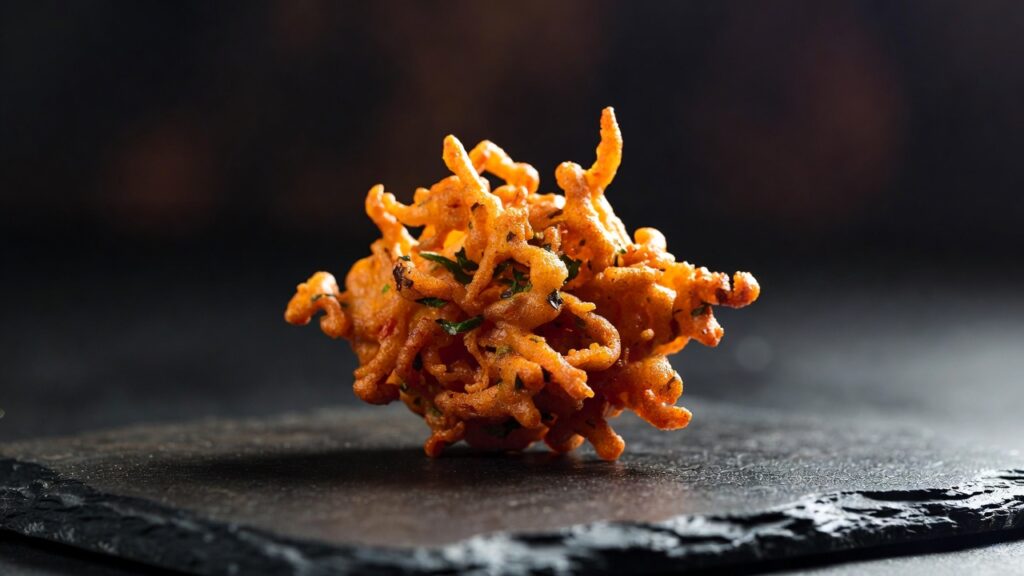
Drop small irregular blobs using your fingers (no spoon, feels wrong). Don’t crowd the kadhai — 5–6 at a time max. Fry till deep golden, not brown-brown. Take out, keep on newspaper (not tissue — newspaper soaks better, fight me).
Eat while it’s burning your fingers. That’s the rule.
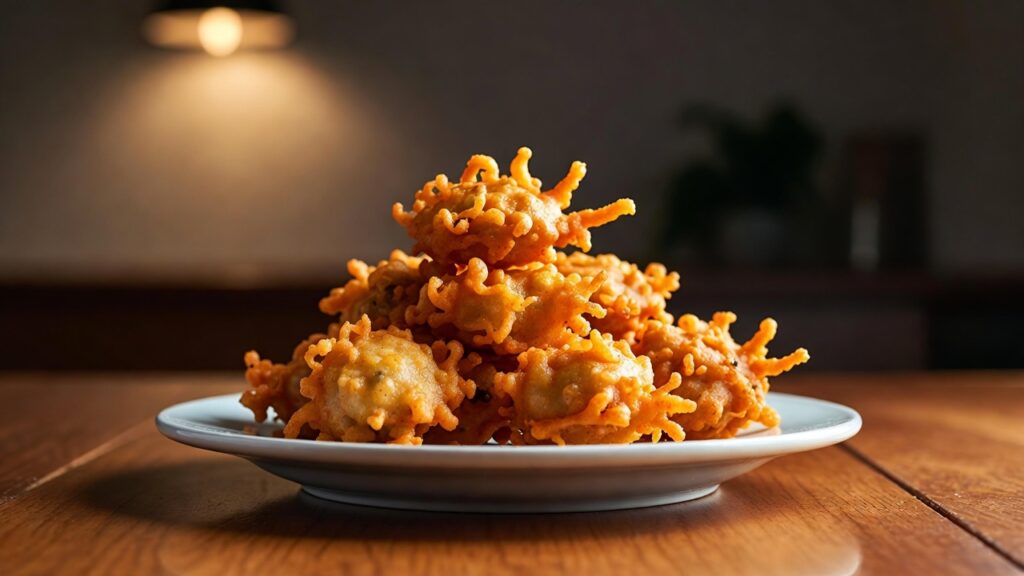
Credit by: AI Generated Img
Chutney quick cheat versions
Green chutney — dhania + pudina + green chilli + lemon + salt + tiny garlic if you’re not scared of smell. Grind rough. Or just squeeze lemon + sprinkle black salt + chaat masala on top. Done.
Read More Recipes: Making Samosas at Home: The Recipe I Actually Use All the Time
Random things I’ve learned after burning/failing 100 times
- Too much water = sad oily pakoras
- Too little water = dry, hard, sad pakoras
- Old besan = bitter taste. Smell it before using.
- If you want insanely crispy — add 1 tsp hot oil into the batter before frying (called “tadka to batter”). My nani used to do this.
- Air fryer version is… okay. Not the same. Don’t @ me.
- Next day leftover pakoras? Heat in oven or on tawa with zero oil. Still decent.