
Okay, let’s talk about Rasmalai – hands down one of the best Indian desserts ever. If you’ve never tried it, imagine super soft, spongy paneer patties floating in thick, saffron-scented sweetened milk. It’s creamy, it’s light, it’s just… heavenly. Every time I have rasmalai, it feels like a little celebration in my mouth.
I still remember the first time I tasted proper homemade rasmalai at my friend’s place in Kolkata. Store-bought ones are fine, but nothing beats the fresh, fluffy version made with love. That’s why I’m sharing everything I know about this dreamy sweet – where it came from, how you can make it at home (it’s easier than you think!), and why it’s so addictive.

Credit by: AI Generated Image
So, What Exactly Is Rasmalai?
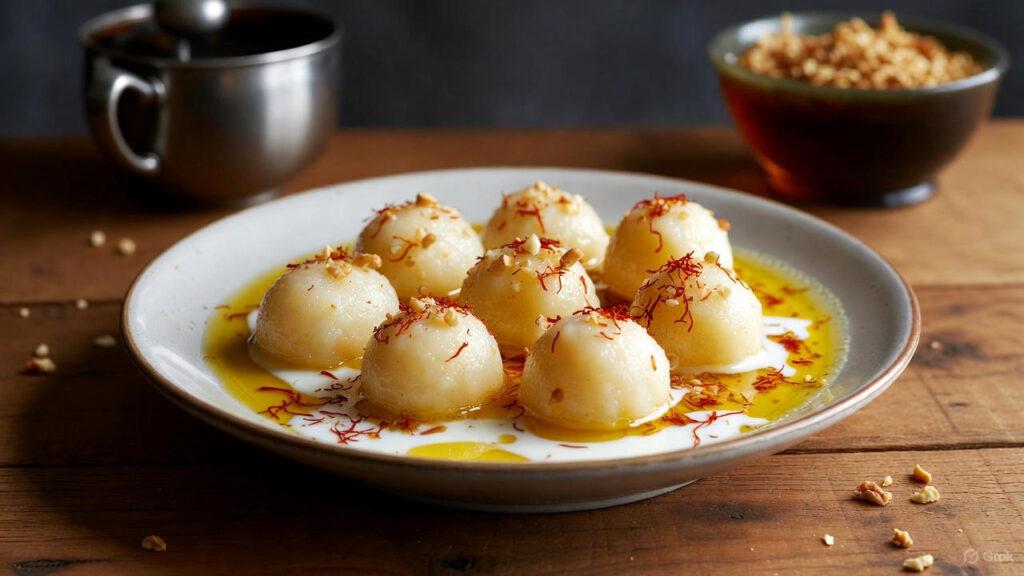
The name itself gives it away: “ras” means juice and “malai” means cream. You start with fresh chenna (basically homemade paneer), shape it into little flat balls, cook them in sugar syrup so they puff up and get spongy, then dunk them in chilled, thickened milk flavored with cardamom and saffron. Top it off with some chopped pistachios and almonds, and you’re done.
It’s richer and creamier than rasgulla (its close cousin), because instead of staying in thin syrup, these patties soak up all that gorgeous rabdi. One bite and the milk just oozes out – pure bliss.
A Little Bit of History
Rasmalai comes from Bengal – both West Bengal and Bangladesh claim it proudly. Most people say it started with the famous rasgulla, invented by Nobin Chandra Das in Kolkata back in the 1860s. Later, his son apparently thought, “Hey, let’s make this even better,” and started soaking the spongy balls in creamy milk instead of syrup. Boom – rasmalai was born.
There’s also a story from Comilla in Bangladesh where a sweet shop made it popular and even got a GI tag for their version. Honestly, I don’t care who invented it first – I’m just glad it exists!

Credit by: AI Generated Image
Rasmalai vs Rasgulla – What’s the Difference?
People always mix these two up. Quick breakdown:
- Rasgulla: Light, juicy, soaked in thin sugar syrup. Great when you want something refreshing.
- Rasmalai: Same spongy base, but soaked in thick, flavored milk. Way creamier and more indulgent.
If rasgulla is summer vibes, rasmalai is cozy winter hugs.
My Go-To Homemade Rasmalai Recipe
I’ve made this so many times now, and it always turns out soft and perfect. This recipe makes around 15-20 pieces.

Credit by: AI Generated Image
For the Chenna Patties:
- 1.5 liters full-cream cow’s milk (cow’s milk gives softer texture)
- 2-3 tbsp lemon juice or vinegar
- 1 cup sugar + 4-5 cups water for the syrup
For the Rabdi:
- 1 liter full-cream milk
- ½ cup sugar (or less if you don’t like it too sweet)
- A big pinch of saffron
- ½ tsp cardamom powder
- Handful of chopped pistachios and almonds
Credit by: AI generated Image
How I Make It Step by Step:
- Boil the 1.5 liters milk, add lemon juice to curdle it, strain, rinse well, and hang the chenna for about 30 minutes.
- Knead the chenna like dough until it’s super smooth – this is the secret to soft rasmalai!
- Make small flat discs (not perfect balls – flatter ones absorb milk better).
- Boil the sugar-water syrup, drop in the discs, cover, and cook on medium flame for 10-12 minutes. They’ll double in size.
- Meanwhile, reduce the 1 liter milk to half, add sugar, saffron, and cardamom.
- Let everything cool a bit, gently squeeze extra syrup from the patties, and drop them into the rabdi.
- Chill in the fridge for at least 4-5 hours (overnight is even better). Garnish and serve cold.

Credit by: AI Generated Image
Pro tips from my many trials and errors:
- Don’t skip kneading – your hands will ache, but it’s worth it.
- Use fresh milk, not old or toned.
- If you’re in a hurry, buy canned rasgulla, squeeze the syrup out, and just soak them in homemade rabdi. Still tastes amazing!
Fun Variations I’ve Tried
- Kesar rasmalai – extra saffron for that beautiful golden color.
- Mango rasmalai in summer – blend some mango puree into the rabdi.
- Angoori rasmalai – tiny little balls that look like grapes. So cute!
Is Rasmalai Healthy?
Look, it’s a dessert, so it’s not exactly salad. One piece can have 250-350 calories, mostly from milk fat and sugar. But it does give you decent protein and calcium. I just enjoy it in moderation – one or two pieces after a meal, and I’m happy.

Credit by: AI Generated Image
Read More Recipes: Gulab Jamun: Why This Sweet Always Hits Different for Me(2026)!
Why I’m Obsessed with Rasmalai
It’s the perfect balance – not too heavy like gulab jamun, not too light like plain curd. It feels fancy enough for parties but simple enough to make when you’re craving something sweet at home.
Next time you’re in the mood for something indulgent, give rasmalai a try. Make it, buy it, whatever – just have it. You’ll thank me later!
Have you made rasmalai before? Any tips or favorite variations? Drop them below – I’m always looking to improve my recipe! 😊